
Brief Introduction
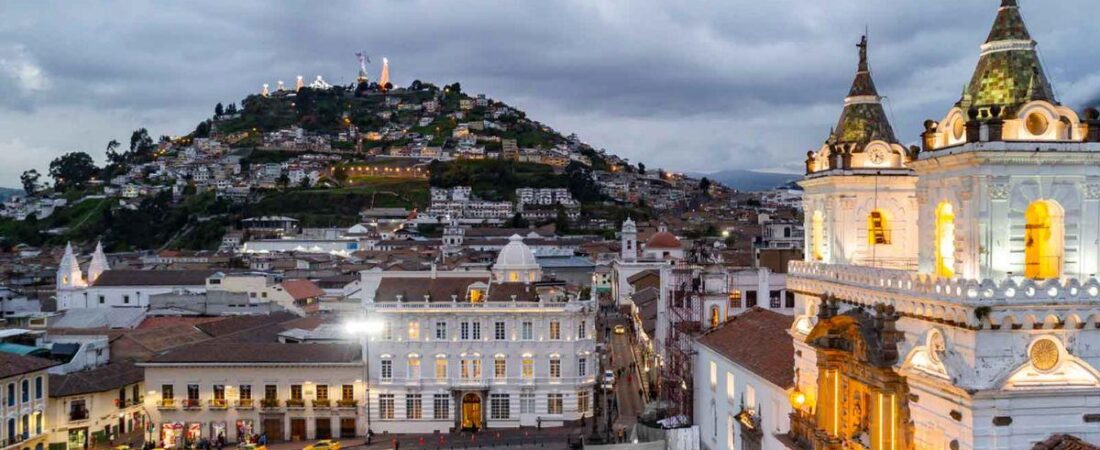
Some places do not need much explanation: you only need to walk through them to feel their history. The Historic Center of Quito is one of those places. Among narrow streets, old squares, colonial churches, and façades full of details, visitors feel as if they are stepping into a living part of the city’s past.
At times, the Historic Center of Quito feels like a small piece of Europe in the heart of Latin America: squares, balconies, churches, bell towers, and stone streets create a very special atmosphere. But Quito is not a copy of Europe. Its true beauty lies in the blend of Spanish heritage, Andean culture, Catholic tradition, Indigenous history, and everyday Ecuadorian life.
At the same time, it is a place that should be visited with common sense. The Historic Center is beautiful, photogenic, and interesting, but to enjoy it better, it is important to know what to see, what time to go, and what basic safety measures to take. That is why the Historic Center of Quito is one of the best areas to begin discovering the Ecuadorian capital.
A Brief History of Quito
The history of Quito began long before the arrival of the Spanish. This area was inhabited by Indigenous peoples of the Andes, including groups such as the Quitus, Caranquis, Cayambis, and other peoples of the northern Andes. Later, the region came under the influence of the Inca Empire.
In the 16th century, the Spanish arrived and, in 1534, founded the city of San Francisco de Quito in an area that already had historical and strategic importance. From that moment on, Quito began to transform into a colonial city, with squares, churches, convents, administrative buildings, and a strong religious presence.
Over time, the Historic Center became the political, religious, and social heart of the city. It was where colonial power, the Church, commerce, and public life were concentrated.
One of the most important moments in Quito’s history was the Battle of Pichincha, on May 24, 1822. In that battle, the independence forces led by Antonio José de Sucre defeated the Spanish army on the slopes of the Pichincha volcano. After this victory, Quito was freed from Spanish rule.
Today, Quito is a modern capital, but its Historic Center preserves this blend of different eras: Andean peoples, Inca influence, Spanish colonization, the struggle for independence, and present-day urban life. That is why walking through its streets is not just about seeing old buildings, but about exploring an essential part of Ecuador’s history.
Why the Historic Center of Quito Is Worth Visiting
The Historic Center of Quito is the heart of the old city. Here, you can see how Spanish colonial architecture, Catholic traditions, local culture, and the daily life of the capital came together.
For a first introduction to Quito, it is one of the best places to visit. Travelers can see old squares, churches, historic buildings, museums, balconies, stone streets, and urban scenes that cannot be experienced in the same way through a photograph.
This place is not interesting only for those who love history. It is also ideal for walking, admiring facades, having coffee, tasting artisan chocolate, visiting churches and museums, and experiencing the real atmosphere of the city.
The Historic Center is not an empty museum. It is a living neighborhood where tourists, local residents, vendors, workers, students, police officers, priests, and the everyday life of Quito all come together.
What to See in the Historic Center of Quito
Before listing the places, it is important to understand one thing: the Historic Center of Quito is not a single attraction, but a collection of squares, streets, churches, museums, and historic corners. The best way to experience it is to walk calmly, notice the details, and not try to see everything in a hurry.
Below are some of the most interesting places for a first visit.
Independence Square
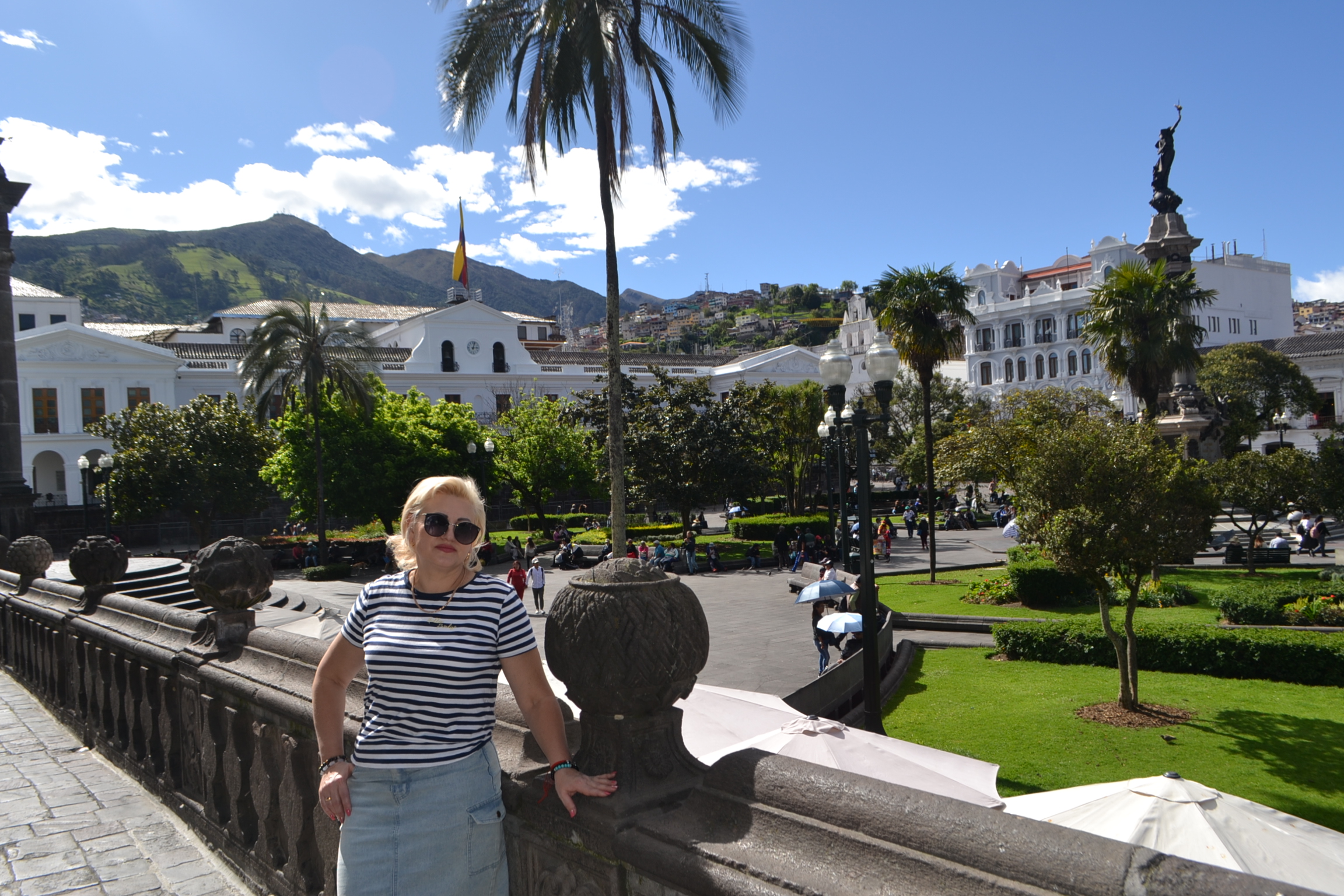
Independence Square, also known as Plaza Grande, is one of the main squares of old Quito. It is often considered the heart of the Historic Center, because around it are important buildings connected to the city’s history, political power, and religious life.
During the colonial period, this area was a central point of public life. Today, it remains a very active place: local residents walk through it, tourists pass by, vendors work there, and official events are sometimes held.
In the center of the square stands the Independence Monument, which commemorates the struggle for liberation from Spanish rule.
Around the square are some of the most important buildings in the center: the Carondelet Presidential Palace, the Metropolitan Cathedral of Quito, the Archbishop’s Palace, and the Municipal Palace.
For travelers, Independence Square is a good starting point for the visit and a place to feel the atmosphere of old Quito.
Carondelet Presidential Palace
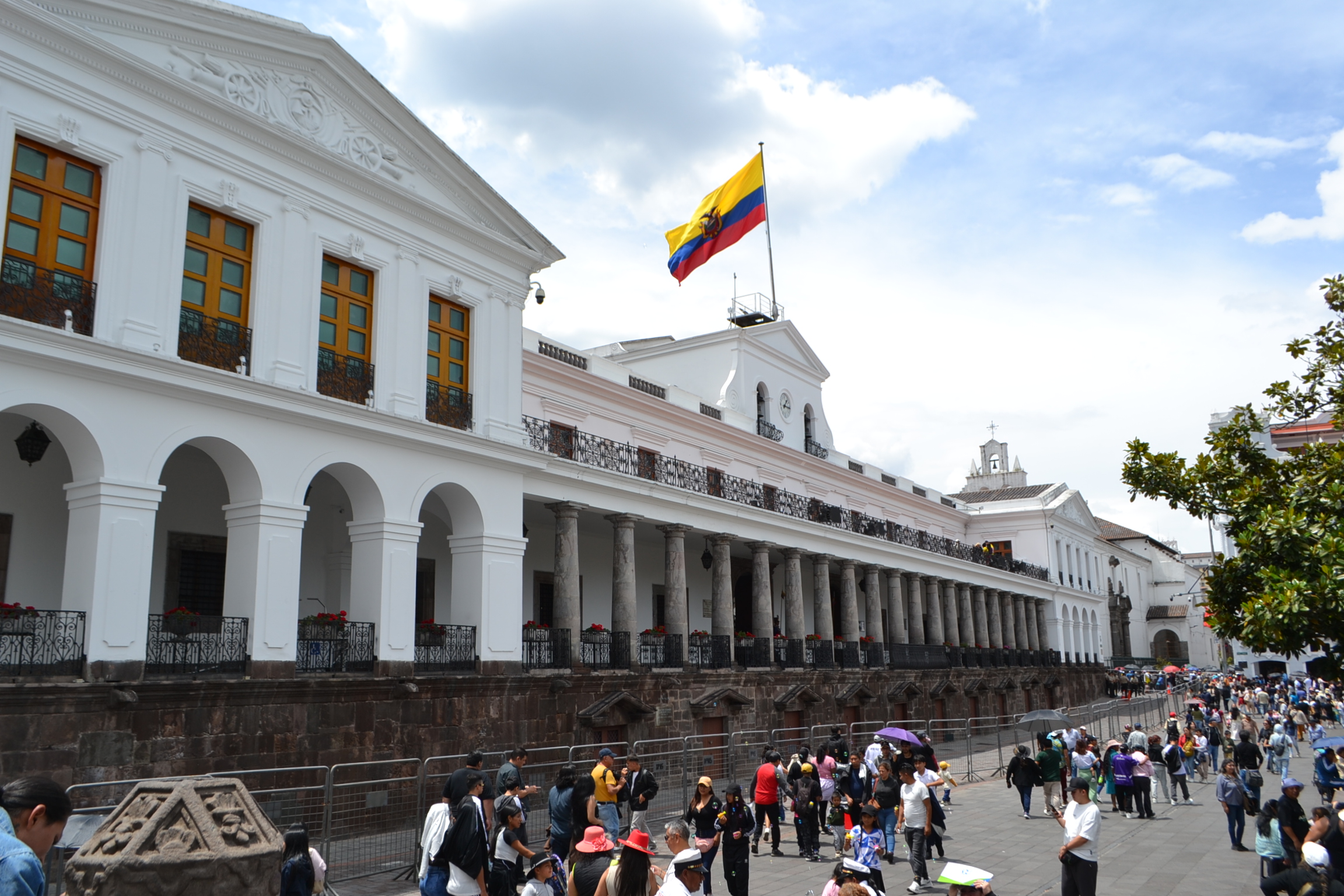
The Carondelet Presidential Palace is located next to Independence Square. It is one of the most important buildings in the country, as it is connected to the political history of Ecuador.
Its name comes from Baron Francisco Luis Héctor de Carondelet, a Spanish colonial administrator who governed the Royal Audience of Quito in the late 18th and early 19th centuries. During his time, improvements were made to the government building located on the main square.
Today, the Carondelet Palace is the seat of Ecuador’s executive branch. For visitors, this building shows how the same place that once represented Spanish colonial power later became a symbol of the Ecuadorian state.
Even if you do not go inside, it is worth seeing from the outside. Its façade, location, and the surrounding square help visitors understand the political importance of the Historic Center.
Metropolitan Cathedral of Quito
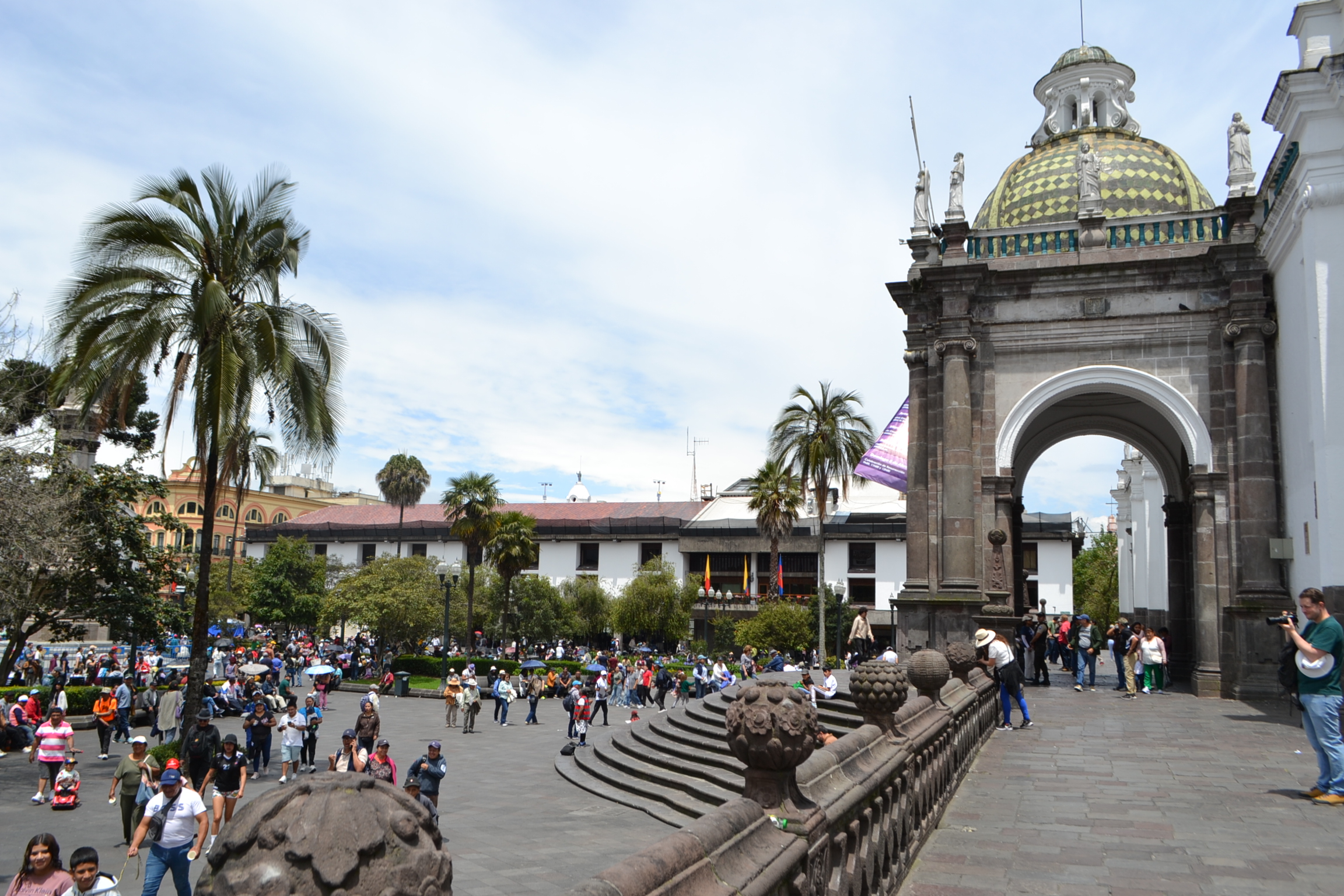
The Metropolitan Cathedral of Quito is located in the area of Independence Square. It is one of the main religious temples of the capital and an important part of the city’s historic ensemble.
The cathedral is interesting not only as a church, but also as a historic space. It helps visitors understand the role that religion played in the formation of Quito and in colonial life.
Inside, visitors can see altars, chapels, works of religious art, historic spaces within the cathedral complex, religious vestments, inner courtyards, and tombs of important figures. Among the most notable elements is the mausoleum of Antonio José de Sucre, one of the heroes of independence.
For a short visit, it is worth at least observing the façade and the surrounding area. If there is time, entering the interior helps visitors better understand the religious and historical importance of this place.
Church of La Compañía de Jesús
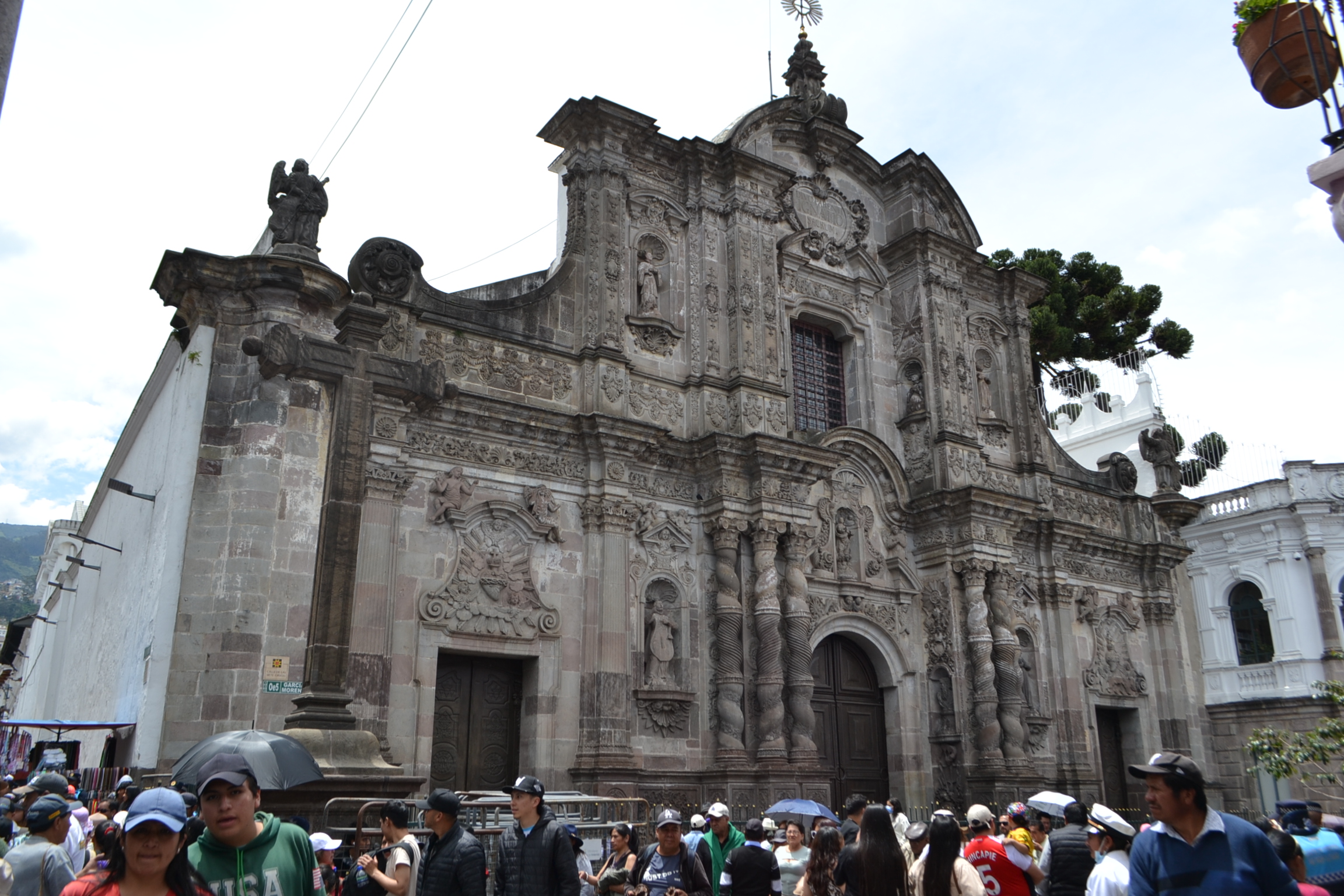
The Church of La Compañía de Jesús is one of the great jewels of the Historic Center of Quito. It is one of the city’s most famous churches and one of the places that most impresses visitors.
Construction began in 1605 and continued for more than a century. As a result, its architecture combines several elements: colonial Baroque, Mudéjar details, European influence, and art from the Quito School.
From the outside, La Compañía stands out for its volcanic stone façade, carved with great detail. But the real impact is inside. The church is famous for its decoration covered in gold leaf. Altars, columns, vaults, reliefs, and carved details shine with a golden tone that surrounds the entire space.
It is important to understand that these are not solid gold walls. They are very thin sheets of gold applied over carved wood, decoration, and religious elements. The result is an interior that seems to be illuminated by a golden light.
Inside La Compañía, visitors can also see religious figures, saints, angels, prophets, evangelists, and biblical scenes. The art is not only decorative: in churches like this, images helped tell the story of faith through sculptures, symbols, gestures, and paintings.
That is why La Compañía is not just a beautiful church. It is a kind of great religious book made of stone, wood, gold, painting, and sculpture. For many travelers, it is one of the most impressive places in Quito.
San Francisco Square and Church
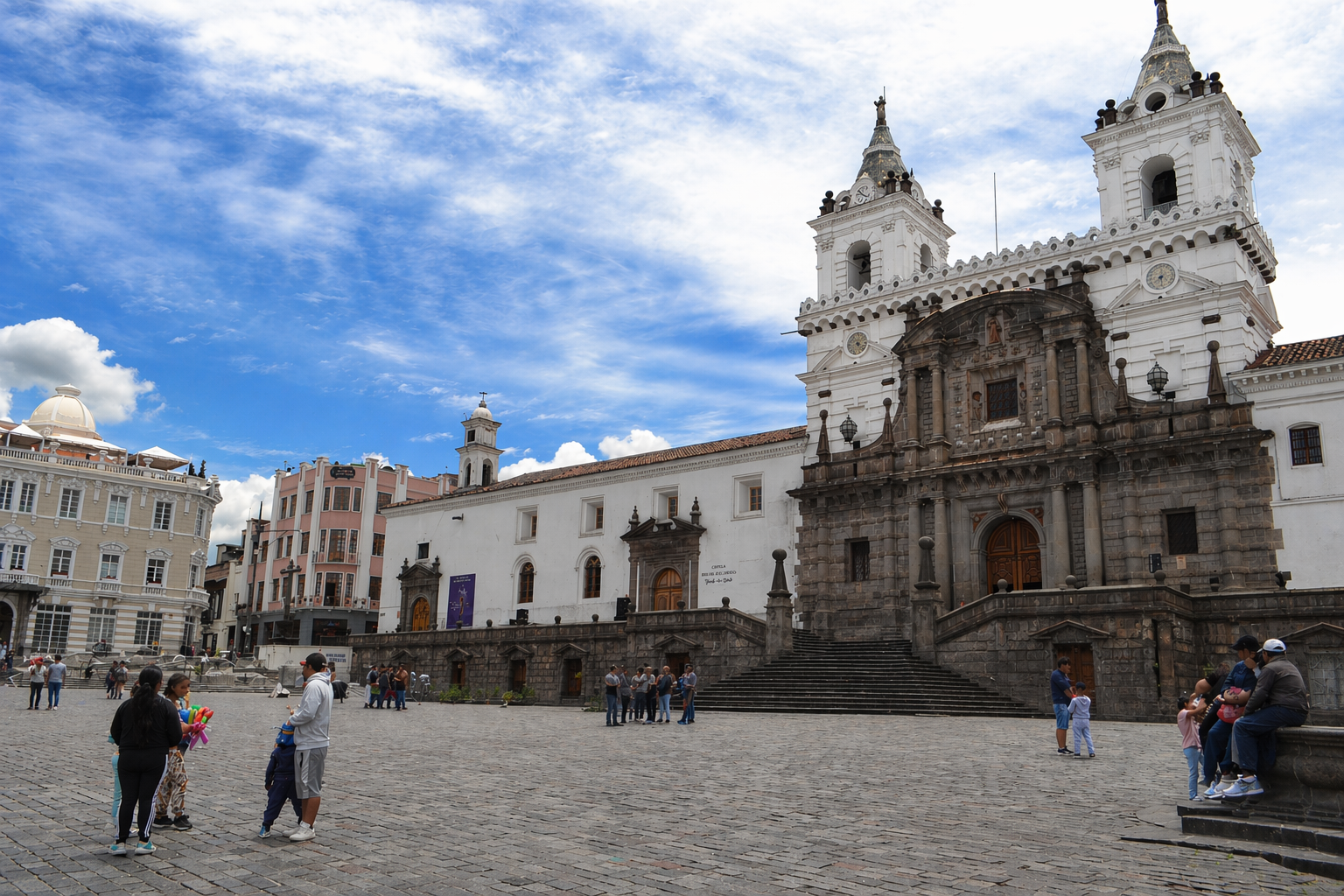
San Francisco Square is one of the most beautiful and recognizable spaces in the Historic Center of Quito. Facing the square are the Church and Convent of San Francisco, one of the most important religious complexes in the city.
Since the colonial period, this square has been a place of gathering, commerce, religious life, and urban movement. Its wide open space, the church façade, the steps, and the mountainous backdrop create one of the most representative images of old Quito.
The Church and Convent of San Francisco form one of the largest religious complexes in the Historic Center. Inside, visitors can see altars, sculptures, paintings, figures of saints, angels, apostles, and biblical scenes. These images do not simply decorate the temple; they tell religious stories through painting, carving, and sculpture.
It is also interesting to observe the details: wooden figures, side chapels, ancient images, biblical compositions, and works connected to the Quito School. That is why San Francisco can feel not only like a church, but also like a large museum of colonial religious art.
This place is also connected to one of Quito’s most famous legends: the legend of Cantuña. According to tradition, Cantuña was supposed to build the atrium of the church, but he could not finish the work on time. Desperate, he made a pact with the devil: the work would be completed in one night in exchange for his soul.
But Cantuña was more cunning. He hid one stone, and by sunrise the construction was not one hundred percent complete. Since that stone was missing, the devil could not fulfill the condition of the pact and could not take his soul. According to the legend, Cantuña saved his soul and gave Quito one of its best-known stories.
La Ronda Street
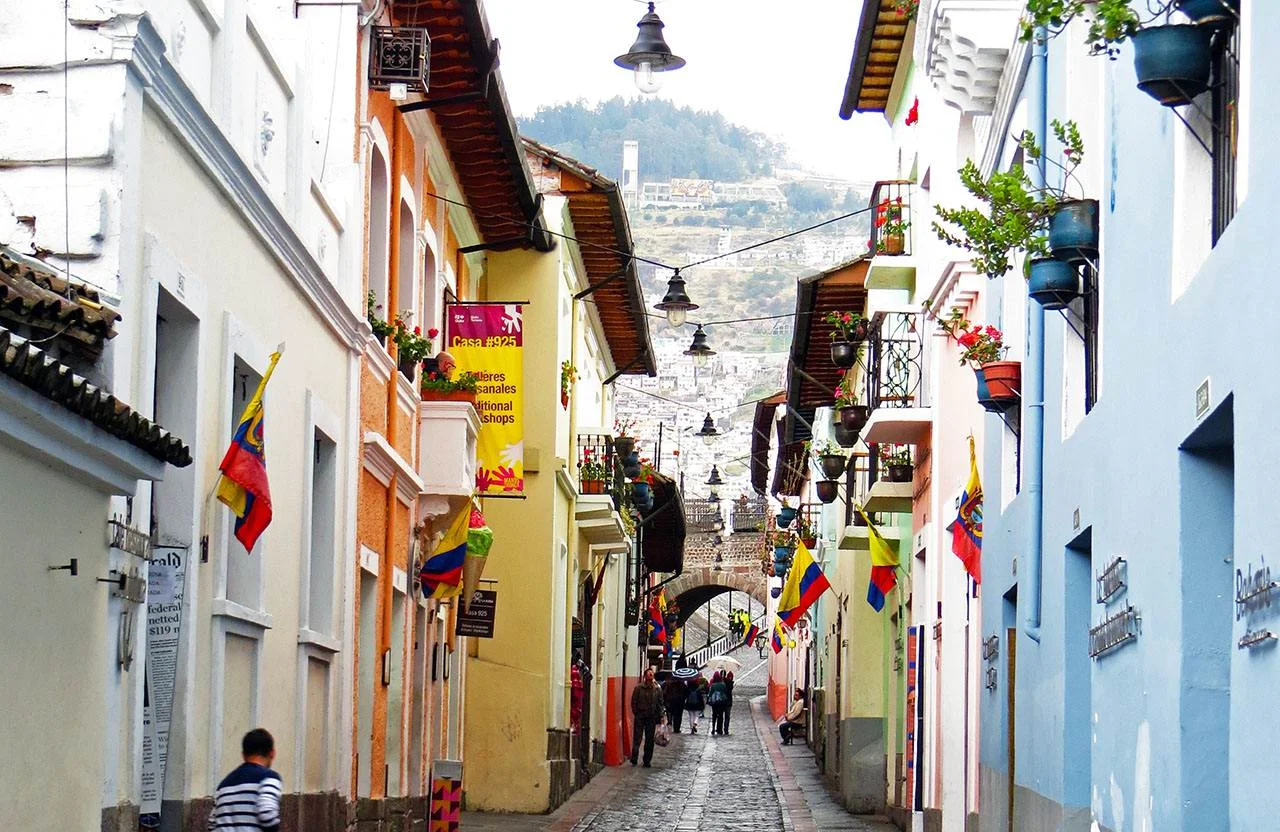
La Ronda is one of the best-known streets in the Historic Center. It is an old, narrow, and very photogenic street, with balconies, traditional houses, small shops, workshops, and a more welcoming atmosphere.
Unlike the large squares, La Ronda offers a more intimate feeling of old Quito: balcony details, colorful façades, old doors, signs, small shops, and corners where visitors can walk at a calm pace.
For tourists, La Ronda is interesting as a place for photographs and a short walk. It is best to visit during the day or in the late afternoon, without wandering into empty side streets.
Artisan Chocolate Workshop and Tasting
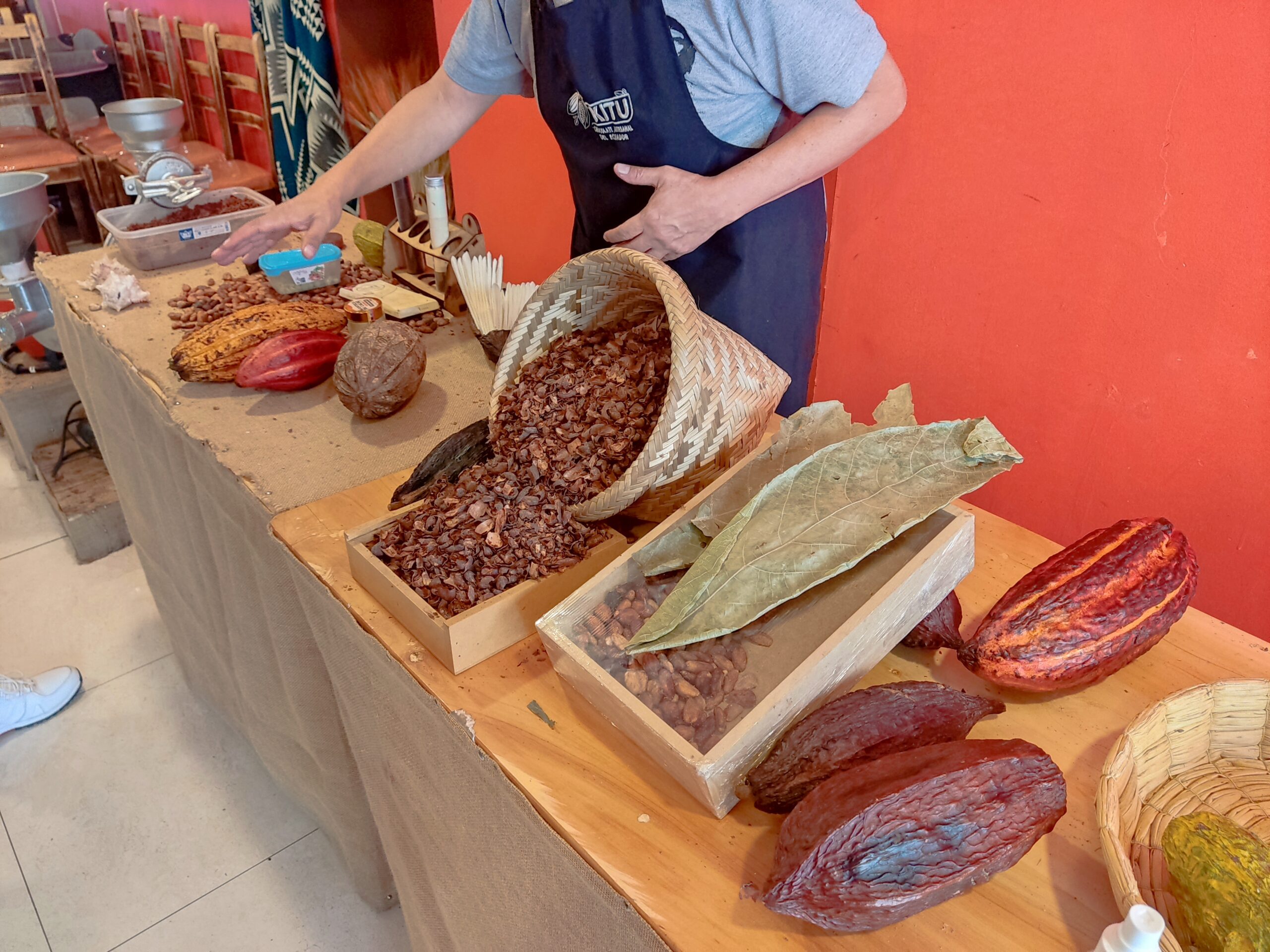
In the Historic Center, there are not only churches and squares. You can also find small, lively places that make the visit even more special. One of them is a small chocolate workshop, where visitors can see how artisan chocolate is made with Ecuadorian cacao.
Ecuador is known for its high-quality cacao, and a stop at a chocolate workshop allows visitors to discover another side of the country. The owner can explain how cacao beans are selected, how they are processed, and how they are transformed into chocolate ready to eat.
The most interesting part is that this is not a large industrial factory, but a more personal, manual, and artisanal process. Visitors can better understand the work behind a simple chocolate bar.
In addition, there is usually a tasting of different types of chocolate. This allows visitors to try several flavors, compare intensities, choose the one they like best, and buy artisan chocolate directly on site.
After visiting churches, squares, and colonial streets, a stop at a chocolate workshop offers a pleasant break. Travelers can rest, taste something local, and take away a warmer and more flavorful experience of the Historic Center.
Basilica of the National Vow
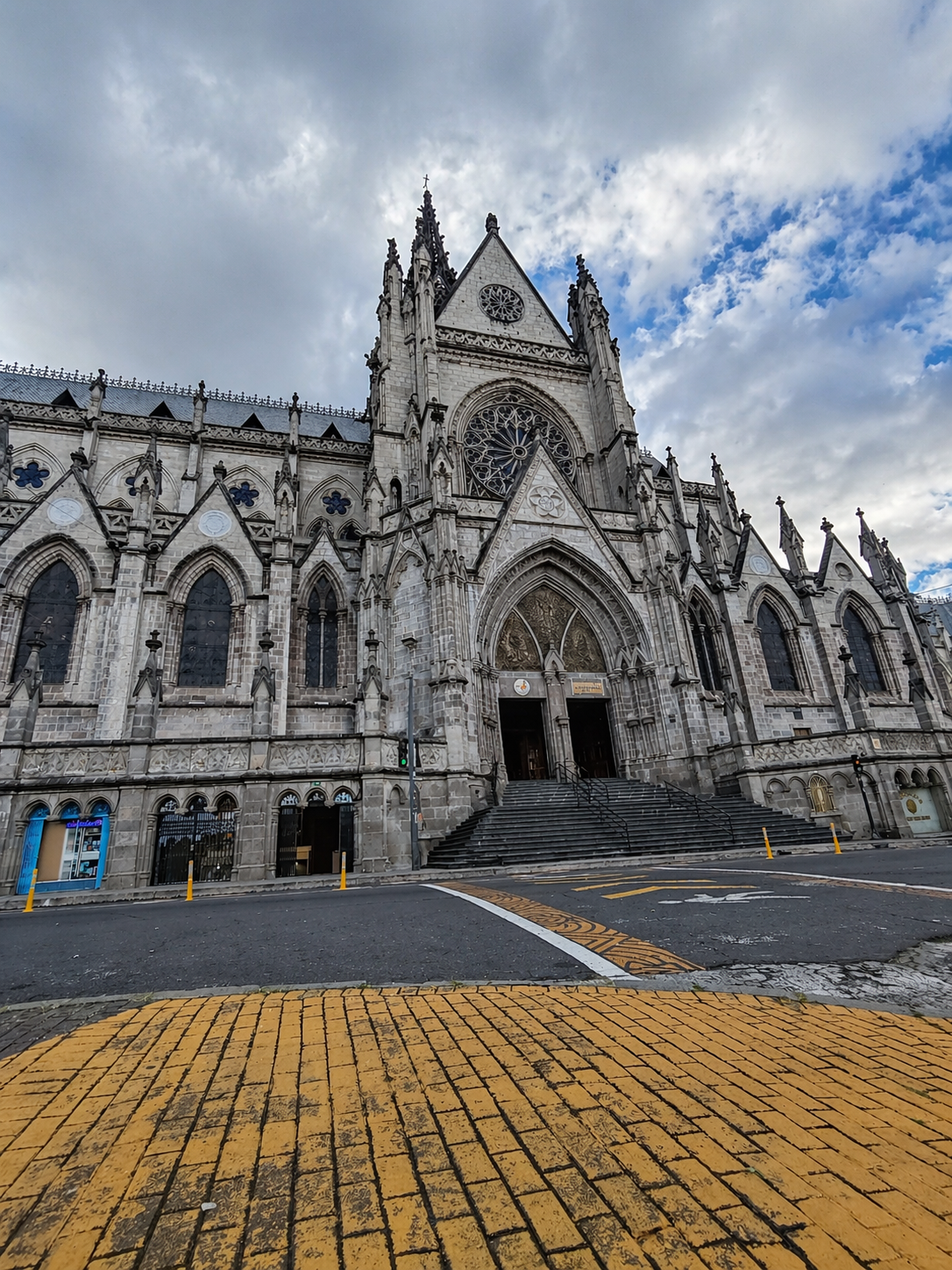
The Basilica of the National Vow is one of the most impressive churches in Quito. It is located a little away from the main squares of the Historic Center, but it is often included as part of a general visit to old Quito.
Unlike many colonial churches in the city, the Basilica has a Neo-Gothic style. Its tall towers, pointed arches, stained-glass windows, and vertical design recall the great European temples. However, its details make it deeply Ecuadorian.
One of its most curious features is its exterior decorative figures. Instead of the traditional gargoyles found in European Gothic churches, here you can see animals from Ecuador, such as turtles, iguanas, monkeys, caimans, and other representatives of the local fauna.
Construction of the Basilica began in the late 19th century and continued for many decades. Today, it is one of the most visible architectural symbols of Quito.
There is also a popular legend that says the Basilica remains technically unfinished, because the day it is fully completed, the end of the world will come. It is only a legend, but it gives the place an even more mysterious atmosphere.
If visitors have more time, they can add the Basilica to their visit. From its towers, there are beautiful views of Quito, although the climb is not recommended for people who are afraid of heights or have mobility problems.
Museums of the Historic Center
In the Historic Center of Quito, there are several museums that can complement the visit very well. It is not necessary to enter all of them in one day, but choosing one or two can help visitors better understand the city.
Among the most interesting museums are the Museo de la Ciudad, ideal for learning about Quito’s history and urban development; Casa del Alabado, dedicated to pre-Columbian art; Museo del Carmen Alto, related to religious life and colonial art; Museo Casa de Sucre, dedicated to Antonio José de Sucre and the period of independence; Museo de la Moneda, where visitors can learn about part of Ecuador’s economic history; and Museo Alberto Mena Caamaño, connected to the history of independence.
A museum can be a good option if the weather changes, if visitors get tired of walking, or if they want to make the visit more complete and cultural.
When Is the Best Time to Visit the Historic Center of Quito?
The best time to walk through the Historic Center of Quito is in the morning or during the first part of the day. At that time, it is easier to get oriented, the light is better for photographs, and visitors can enjoy the route with more peace of mind.
For a first visit, it is better not to choose the night. Although some areas may be lively, for a tourist who does not know the city well, it is safer to walk during daylight hours.
It is also important to remember that Quito is located at high altitude. For that reason, on the first day after arriving, it is better not to rush or plan a very long walk. It is best to walk calmly, drink water, take breaks, and not try to see everything at once.
The weather in Quito can change quickly. In a single day, there may be sun, clouds, and rain. That is why it is a good idea to wear comfortable shoes, bring a light jacket, and allow some extra time.
Safety Tips
The Historic Center of Quito can be visited and enjoyed, but tourists should remain attentive. It is not about being afraid, but about using common sense, as in any large city in Latin America.
The main rule is not to show valuable items unnecessarily. It is not advisable to walk around with your phone in your hand all the time, display jewelry, carry large amounts of cash, or leave your bag open.
It is better to stay in the main tourist areas, avoid entering empty side streets, and not walk late at night if you do not know the area well. If you need to leave the center, it is preferable to use reliable transportation.
Visitors who are in Quito for the first time, do not speak Spanish, and do not know which streets are comfortable to walk through and which ones are better to avoid should be especially careful. In that case, being accompanied by a local person makes the visit calmer and clearer.
- walk in the morning or during the day;
- avoid showing your phone, camera, or expensive jewelry unnecessarily;
- keep an eye on your bag and backpack;
- do not carry too much cash;
- do not leave belongings unattended;
- avoid empty or poorly lit streets;
- do not walk late at night if you do not know the area well;
- use reliable transportation;
- if it is your first time in Quito, consider taking a guided or accompanied visit.
Alone or with Accompaniment
The Historic Center can be visited on your own, especially if the traveler has already been to Latin America, can get around the city well, speaks Spanish, and understands how to move through busy areas.
But for a first visit, having accompaniment is often more comfortable. The traveler does not have to think alone about where to go, where to stop, what places to see, where to be more careful, and how to return safely.
Accompaniment is especially useful for families, older travelers, people who do not speak Spanish, and those who will be in Quito for only one or two days. In this format, the visit becomes calmer: there are fewer doubts, fewer improvised routes, and more safety.
It is important to understand that accompaniment is not only an explanation of tourist sites. It also means help with orientation, transportation, safety, the pace of the visit, and communication on site.
How Bernabé Travel Latam Can Help
Bernabé Travel Latam can help organize a calm visit to the Historic Center of Quito for travelers who want to discover the city without rushing and with clear accompaniment.
This format is ideal for those who are visiting Ecuador for the first time, do not speak Spanish, or simply want the visit to be more comfortable. The meeting point, schedule, pace of the visit, and main places to see can be coordinated in advance.
We can help with accompaniment through the Historic Center, transportation, hotel or airport pickup, explanations of the places in Russian or Spanish, practical safety tips, and a walking pace adapted to each person.
The main idea is not only to take travelers to beautiful places, but to make their first contact with Quito calm, clear, and enjoyable.
- accompaniment through the Historic Center of Quito;
- help with transportation;
- hotel or airport pickup;
- explanation of the places in Russian or Spanish, or in English with a translator;
- safety tips;
- individual pace of the visit;
- help with photos and stops along the way.
Conclusion
The Historic Center of Quito is a must-see if you are visiting Ecuador’s capital for the first time. In the Historic Center of Quito, you can see old squares, beautiful churches, colonial architecture, museums, local life, artisan chocolate, and the special atmosphere of an old city.
It is best to visit the center during the day, walk without rushing, and know in advance which places you want to see. It is also important to follow basic safety rules: do not show valuables, keep an eye on your bag, avoid empty streets, and use reliable transportation.
If you would like to discover Quito calmly and without complications, Bernabé Travel Latam can help to organize a visit through the Historic Center, with accompaniment and comfortable transportation. This format is especially convenient for a first visit, family trips, and travelers who do not speak Spanish.

Leave a Reply